5 Steps To Getting A’s For Those Who Are Not Type A

Some people can do the work and just get that A. However, that’s not most people. Most of us have difficulty and some, A LOT of difficulty, especially those with creative minds.

Having a creative mind means always living in the now, following the current thought, and losing the past and the future. This makes it difficult to accomplish tasks. But humans are blessed with a mind, and you can plan for those mistakes and if you can overcome those limitations, you can do anything.

So if you want A’s and you want to get homework done and projects completed and avoid procrastination, you’re going to need a strategy and a plan, and here is that plan.

The problem with getting things like projects and homework going is that sometimes you lack motivation. The metaphorical rock of a task for someone with a creative mind or someone who isn’t Type A is much larger than the one for others but you are also weaker in pushing it. However, you can do several things to get it going.

  1. Prepare the rock.
    It is harder to move a square than rolling a rock, so spend some time preparing for the task, break up the homework into small pieces so when you get the ball rolling, it keeps rolling. For instance, if I had 100 pages to read in a week, I’d break it into 20 pages a day. So if you have 10 problems, make it 2 problems a day. That way you don’t try to do too much and feel like you make progress. Just the plan will make the square boulder feel smaller and more round.
  1. Use leverage.
    A lever will move a rock better than pushing it, so what is your lever? Perhaps telling others to make pressure on yourself, becoming accountable to others. Create deadlines that force you to get it going. I like to write reminders and set alarms or put things into the calendar. I have a calendar for the day and the week so I constantly see the goals and mark off the days and check off accomplishments, that way you can see the ball rolling. Find your levers and tools, write them down, and use them. Write them down because you will forget them and it is good to remind yourself.
  2. Avoid and Use Inertia.
    Getting the ball rolling is hard, but to keep it rolling is a lot easier. It is important to not stop because we know that getting it going is hard for us. Keep the rock going with a checklist, with daily goals that you MUST hit, with check-ins and games like a list of all the days you hit the goal. I create weekly and daily and monthly goals that I get to cross off. Remember that if you stop for a day or two, you will lose a lot of things from your brain. Keep a journal to write daily progress and write notes about things that went right and wrong. It doesn’t have to be a long entry. Journal app Day One allows me to make a quick one to two sentences about my progress, my thoughts on my progress, and things I can do better for tomorrow. The main thing is to keep moving and remember, if you did stop, you will move again, once you get the ball rolling.
  1. Use Gravity.
    You can push a ball on a flat surface to a goal, or you can raise it up on a ramp and let it roll down by itself. If you set up the bag before you go to school or put shoes outside your bed to run in the morning, or set the floss in front of you so you see it, or as I, for instance, put the calculator in a visible area to always see what I have to do. If you organize the day around your actions and goals, you can have them be on autopilot so you don’t have to think of “what do I do now”, the day will roll along like a boulder down a ramp. So think ahead and prepare things so you don’t have to work against gravity for the things that are hard and let them sort out.
  2. Get Help.
    The Egyptians used sheer numbers to build the pyramids, so if you are undertaking a big project or have a big test use help as well. Sometimes you will have to recruit others and know that you will have to help them, but without them, you will not get to the goal as fast. If certain things are too hard for you, find someone who likes to do it, like I have someone filling out paperwork at work because I forget it and they are good at it. If your group you can find someone who is good at keeping track of something in a project or get a study group with people who like helping each other and are good at subjects and will keep you on task. Everyone has strengths and weaknesses, never measure yourself on the weakness but instead on strength and let others use their strengths to help you, it will make you both feel good.


So remember, everything in life is just physics, including achieving your goal. For some it’s harder to meet them, but not if you prepare your task, use tools to make it, avoid inertia by not stopping and using it by going forward, using gravity to let things be automatic, and getting help to get around weaknesses. If you do that, you will be unstoppable. Some people have a harder time focusing and getting things done. But it happens often that if those people put their minds to getting around their limitations, they will be even more successful than those who don’t have to work at it. Because you’re not dumber, you’re just better with the big ideas, but big ideas need details and for that, big idea people, make strategies.
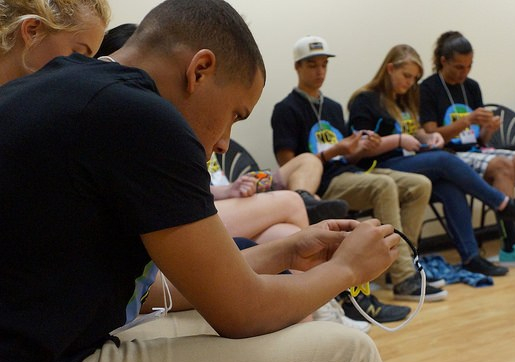
Master’s Thesis (with ADHD)

Writing a thesis is no cake walk. People can spend anywhere from weeks to years working on their Master’s Thesis. The reason why I think it can be so difficult is because at no time in our graduate education does anyone actually teach us how to write one, how to prepare for one and therefore, nothing really prepares you for it.

I attempted to work on my methods and outline and introduction a year into my thesis. It was for nothing. For one thing, you may not truly understand your thesis as a Master’s student because you work on a project for a graduate student or professor who have years of thought behind the project. Another reason is that your methods and ideas are ever changing. The third reason is that the research brain is so different from the synthesis brain and it is virtually impossible to use both.

This is what in part makes the thesis so difficult. Because as you write the thesis, a lot of times new ideas or thoughts will come to mind on data analysis or perhaps you notice something in the data that is wrong. So you have to switch back to programming and coding and analysis that you may have in someways forgotten after weeks of not touching the code. Then once you get the new data or plots, you go back to the thesis, where you have to again skip the papers, read what you wrote and try to make sense of it all.

For me, there was an added issue of becoming diagnosed with ADHD. People with ADHD fall into two categories: those who fail at life and those who continuously work to compensate for ADHD to marginally succeed if just avoid constant failures. My life was pockmarked with people thinking I was smart but lazy and careless. This is normal for someone who has undiagnosed ADHD. It was normal for me to have slow starts, to be up until 12 am before I start work ( I’m writing this at 1am), it was normal to wait until the professor emailed me (deadlines are a godsend for adhd people). So I will go over some of the tactics and strategies that I developed to make progress on my thesis. I was on medication for less than a week (it helped A LOT) but I couldn’t continue due to side-effects, so all of these tactics helped me and will help you ADHD or not.

  1. Read How to Write a Thesis by Umberto Eco
    This is an old book but he writes so well on why you write a thesis, how to make a bibliography, how to create a logical dissertation, how to spend time writing etc etc etc. This book just makes you feel more prepared and like you know what is expected and where you are going. I read it months into the process and once I did, I feel it accelerated things.
  2. Keep a notebook and write in it.
    Having a notebook helped me have a place where all information was placed but also where I could write ideas and tasks. There are many good resources. A book by Fitzgerald said to put in KP for key point, * for Action Item and ! for an important idea that allows you to see what you have to do. One problem for me is I forget to read my notes, but it is good to have them.
  3. Journal
    Writing in a journal was very helpful to keep my thoughts in place, to review what I did, the mistakes I made, and what else I have to do. Even a short entry of “didn’t get anything done” was great because then I would think why I didn’t get done. One of the issues of ADHD is a lack of introspection and understanding what you’re thinking, doing, and why. Journaling helped with that.
  4. Deadlines
    I hate talking to people about failing, but as months dragged on I realized that I need accountability. As it turns out, accountability is great for people with ADHD as it puts a fire under our buts. I told my professor that I would let him know about my progress every Tuesday, not for his sake but for mine. It helped a lot!
  5. Spreadsheets
    Spreadsheets with as much information as I can get on my experiments that I can quickly lookup. Each tab in the spreadsheet had important information about the files, about the data. The more organized it was, the easier it was to go back and find the information I needed in my writing. Overall my files were a mess and it was hell to find things, but the spreadsheet with all of the plots and data simplified things. I still made many copies and screwed up and got lost, but it was better than nothing.
  6. Support Network.
    The draft I sent to the professor is atrocious. One issue with ADHD is being terrible at editing because of a lack of ability to sight details. So I had to enlist friends (those poor souls) to read my terrible writing to help me find the logical missteps and terrible grammar and spelling. The more people read the thesis the better. To help them out, I would send a section at a time, and then as they worked on the next, I’d fix the one they sent me and then forward it to the next person. This way I was going through several rounds with every person. One thing I did was to have people who understood the science least edit first so that clarity was fixed as well as grammar and spelling and then I would send the drafts to the people versed in science who I would not want to torture with bad grammar but instead want to review my scientific thought process.
  7. Routine
    The more you can create a routine the better. Running, meditating, lack of drinking, working all day, making sure some work gets done, writing out a daily plan, and then working to stick with it are all things that helped me make progress. I even had a plot with the number of hours worked per day to show myself if I am doing better or worse. There is nothing harder for someone with ADHD than a long term project that requires a lot of reading, a lot of writing, and a lot of thinking, so the more systems you can create, the better. People with ADHD have to move, it helps us think but humans, in general, do better after moving, exercising, calming. Making blood blow through the brain and then taking some time to just sit and de-stress is helpful for all people, but it is a must for anyone with ADHD. When I did not do this, my progress slowed to a crawl.
  8. Print Out The Papers.
    I had to read over 100 research papers. With the terrible memory, I needed to take notes, I needed to print them out (it’s not the same as reading them on a computer) and I had to review them over and over again. So if you have to read a lot of research paper, get a printer and print them out. It will help. An additional thing that helped was stapling a blank piece of paper to the front on which I wrote the name of the paper, the name of the first author, the year, and then important notes and references. This created a one-pager reference (learned about this from Astronaut Chris Hadfield). So when I was writing and needed to find the reference, I just went and found it by looking up the first page.
  9. Side Projects
    My wife hates them but the more things I had to do, the more progress I made. When I had all day to work on the thesis, my brain which is incapable of keeping track of time would waste the day. But if the day was filled with things to do, it would actually get more work done on the thesis. It created more pressure and that helped me progress.

I’m still not done with my thesis (although I’m closer than I ever was). I’m sure with medication, I would have finished a while ago. However, I am also very proud that I’ve done this well in spite of not being medicated. The positive thing is that I also developed some techniques that I can use for the rest of my life with many other goals that I set for myself (like a PhD) and perhaps help some of you. So if you have a thesis to write, and you are taking a long time, check the problems you have, it may not be your fault and design your own system that will help you finish your goals. It’s a lot of work, but if it was easy, you wouldn’t be doing it.

A Prelude to a New Book

Dear students,

I was reading this NYTimes article about how to write a thesis as I am writing my Master’s Thesis.

It is hard to believe but it has been over five years since I created this book. Not many people have read it. But it is like a capsule about my time in college. I am now 38 and I am finishing up a Master of Science and an MBA and considering a PhD. I think of this moment in time, I think of what it means to be educated today. It means so much, because those who do not complete college education, are nearly guaranteed a life of poverty. Having college education will not absolve you of debt or make you rich, but it will prevent you from being poor. Even so, the education has come to be devalued. Professions are disrespected, degrees are scoffed at. The time and effort it takes to get one is assumed to mean nothing. But it is not nothing. The effort it takes to get a degree transforms a person. Take any college graduate and compare their ability to think and write compared to a high school graduate. There is no comparison. Compare a Master’s graduate ability to work and a Bachelor’s graduate, there is no comparison. Compare the expertise and trajectory of a PhD with a Master’s graduate, there is no comparison. They are all in a league of their own. They are different not because they are different people, at some point the Master’s student and a PhD candidate were no different from each other, but the experience of research, of failure, of writing and publishing changed the person.

When I began my Master’s thesis, I knew that the difficulties I would face were the difficulties of a man who completed a Bachelor’s and was transforming into a Master of Science. It would not be easy. The man would not want to change, it would take concerted effort to make that man. I have not yet succeeded, I am on the way though. When I complete that thesis, I will be a different person, someone who can take research, complete it after many years of work, and present it to the world.

The world scoffs at scientists who speak of climate change, it scoffs at doctors who try to give vaccines, it does so because too many, went through college for the college experience instead of the learning. They crammed and they passed and they assumed that all that knowledge had no value, that passing the class had value. They have no idea how they changed, how they became better people, even if they cannot recall all that they learned.

I plan to write another book now, for the Master’s and PhD students. I hope to convince you that you are not about to waste your time, you are investing in creating a better you, for a better world. I hope to also convince the rest of the world, that knowledge is not easy to gather, that studying is hard work, that people who have a degree, fought hard to get it and it is more than a piece of paper, it is the culmination of learning hard to learn knowledge, reading of dozens of dense textbooks, of writing dozens of hard to research papers and of dozens of experiments that failed and one that opened up the world to all of us, to something new.

Knowledge isn’t free, it has value, we have value. Let’s value knowledge and those who worked so hard to get it and then pass it on, through work or through teaching. Because without knowledge, when we discount knowledge and trust in hypotheticals and demagogues and charlatans without knowledge or experience, we create chaos and suffering.

How To Study For An Exam

One of the toughest things about school is of course exams. They are stressful, they are long and they are difficult.

This is how I studied as an undergrad:

I usually stress about it a lot and so I put it off. As I get closer to the date, I procrastinate, clean, go on social media until there is no more time. Then I cram and then I fail.

Here is how I study as a graduate student:

In essence, I study the way I would prepare for a big race or a big competition. At the end of studies, I make a study schedule. I break up the material into even chunks with a day for a practice test and some rest. I set a day for each portion of the class and I find that it is easiest to review material at night before I sleep and then complete practice problems in the morning when the brain is fresh (and also probably the time you will take the exam).

When you complete problems, either have a solution set or ask others what they got. Then go over the wrong ones and try to solve them again.

Two or three days before the test, solve a practice exam. Again go over the problems you got wrong. Try to relax the night before, maybe just go over the material lightly one more time.

Day of the exam, trust your studies.

So the key to studying well is not smarts, but managing your stress and anxiety. The way to manage it is not to think of all the stuff you have to study or how you don’t understand the material but to make a plan.

Of course, this is easier in Graduate school or at schools where you have fewer courses and they are spread out. In my undergrad, we often had a week for all of the finals and usually three or four of them. This means you often have to begin a week before the final material is done. But the key is still to plan out your studies hour by the hour instead of day by day and then work the plan.


Resources

Some other resources include some reading, but it’s ok, you’re in college to read and learn, so you won’t mind:

The Anxiety Toolkit: a great book on dealing with all sorts of anxiety by Alice Boyes.

Getting Things Done by David Allan on how to set a plan and work it.

Power of Habit by Charles Duhigg: how to identify a bad habit, break it and create a new one.

You have 40-60 years after college, make it anxiety-free and successful.


Finances, College and Alternatives

So you’re probably picking a college right now. Maybe you already picked one but now you know how much it is and you realize that after living expenses you will finish your degree with massive debt.  So what do you want to do? Not think about!

I know that is tempting. I almost did that but ended up staying at home instead of moving cross country to an expensive school and went to a public University instead.

But that’s not what you want to hear. You want to hear how you can have your cake and eat it too (that’s why we buy the cake after all!).

So here are some tips:

First what not to do:

  1. Scholarships: forget about them! You will not earn $150,000 in scholarships. Few people get them and the amount it takes in writing essays and talent in choosing right places is more than a full-time job and the returns are less than working a full-time job (I wrote about this after spending a month trying, I got zero scholarships).
  2. Don’t get an unsubsidized loan. They will kill you on the interest rate, it can never be forgiven and they are relentless in pursuing it, will even deduct money from your paycheck. So if you have to borrow more than the subsidized government loan, DON’T DO IT!

Do, However:

  1. Haggle with the college. If you have other options, call the financial aid office, tell them, maybe they can find a scholarship at the college.
  2. Check out alternatives abroad. Many colleges abroad are free tuition: Denmark and Germany are free even for Americans. Some graduate degrees are free abroad as well. In Israel, a Master of Science with a Thesis is paid for and you get a monthly allowance of about a $1000 which is just enough to survive on.

MOST IMPORTANTLY

Think about what your future job is. If you don’t know, don’t go for a super expensive degree. If you do know and you know how much you will make, check how long it will take to pay back your degree. When you do that, consider the full cost of education, including graduate degree. If the cost is too high, minimize your undergrad cost so that you have the best school to choose from for the Graduate Degree, as that degree will matter more than your undergrad.

LAST TIP

If you do get into Harvard or Yale, try to go there. Most likely whatever degree you graduate from the best university, will pay off even if you take on loan. And if you do not get into the most prestigious University but you know what you want to do with your life, pick the one with the best program in your field. You will get the biggest bang for your investment in knowledge and credibility that will help you land the best jobs in terms of pay and satisfaction.

So in the end: be proactive, a little bit of thought and action now, can save you a ton of money, stress, and headache later.

Good luck!

1st day of MBA

This will be a little different. Less description on what to do and more about my experience in my first day of MBA. Today was my business school orientation. I’m doing a program abroad, my second Master’s in Executive Business Administration.

Thoughts were that this was different from any other school orientation. They didn’t take us around the campus. There was no booze and we barely had time for the snacks and food provided. It was an hour of introduction to very successful people in the class who were driven and interesting. Then we had some presentations from professors, an hour case study where we met our groups and then were shown just how many things we would learn to make better decisions in our future teams.

There were a lot of people who are married with kids who talked about their kids. There was a VC with a podcast, a sales guy with a book, a Jordanian who rides motorcycles and delivers aid in Syria, a PhD who has a medical startup, a Japanese business consultant and a Palestinian photographer among many other equally impressive students.
My team was an interesting woman who works for Noble and knows  my friends who work there. Another guy on our team  happened to find out that his best friend was in the program at the program. He works at Melanox which is a company that bought Luxtera where I also worked at one time.

This group of people is very different from my Ecology class. Much older. This time I didn’t feel age-wise towards the top of the class but in the middle class of age. They were far more assertive, speaking up and chiming in even though it is the first day of orientation.

The ratio in the class is pretty bad, mostly men and mostly Israelis. The dress code was pretty casual,  one of the professors wore TEVA sandals and a t-shirt. But majority wore button up shirts and jeans.
One thing that I found strange is no business ethics course, that seems like a must in this day and age.

I am pretty excited to see how this goes. I think it will end up being challenging but good.

Finding Focus- The Real Battle Of Being a Student.

focus

The first month of January of 2018 I took on a big goal for me: focus. Focus is elusive for me and most other students. It is something we strive for but for me, with a clear case of un-diagnosed and untreated ADD, it was not easy to deal with. Like other people with ADD I’ve had my share of  half-started projects which were always half-worked on, an obvious effect of lack of clear focus. Finishing something creates a feeling of pride and accomplishment, and lack of it  is always upsetting and depressing. So for the month of January, I decided to develop focus by doing one thing at a time. No social media while working, no task switching. I’m going to do one thing at a time and I’m going to do it well.

First Week

When creating a habit, I find the first week to be the most important and the most trying. It is the week for laying the foundation; if you can lay a good foundation, you will have a very good week two. Step one was to find tools to help me. The first tool was planning. I already plan my weeks in advance but now I really needed to use the block schedule I learned from Deep Work to the best of my ability.

Each block is an hour long. I know that I have a hard time starting and I lose focus midway through. The thing to help with that was the Pomodoro timer. I have one on my laptop and it  helps to start it at beginning of every hour. It is advised to have it for 20 minutes to get started but I set it for 45 minutes. 45 Minutes is great to do good work and at end 5-15 minute break is great to stretch. I can really get into the groove and if I get distracted, I see that I have 20 more minutes and it helps me to push through to the end.

On the block schedule, I really try to put in everything: bus ride home, what I do during that ride, lunches, breaks, rest time. This way I have a realistic week. I also started to keep track of hours on different projects. Planning out the week with most important things to do and how much time I want to spend on school, work, side projects really lets me know where my time is going and how to plan things. I also put at the top of each day the one thing I need to do that day, it can be homework or a specific task, but it is the one thing I can’t forget to do. I even put specific homework problems or sections of code I plan to write for projects. Breaking up work like this for my GRE testing really helped.

Another thing that happens with my ADD brain is that when I’m working on a single task means getting many random ideas. Ideas for new projects and thoughts of things I “should be” doing come up. The mind doesn’t want to focus and usually, I’d go off on the tangent thinking: ” I remembered this! I can’t not do this now or I won’t do it later.” So I get the non-urgent thing done while not focusing on the important thing. This causes me a lot of lost time in the end because I don’t get deep into the task to do it efficiently and on time. The way I solve it is that my weekly schedule planner is near me. On the back side of that sheet is blank and so I write down these ideas and task on it. Then when the break arrives I try to do the tasks. If they are really important, I do them, if not, I don’t. This way I get my main task worked on without interruption and still remember to do the thing I remembered to do while working on the main task.

While working, sometimes silence is terrible. However, music that I used was either foreign music so as not to listen to words or music that has no words.  Listening to podcasts was most often terrible, especially those which have really interesting information. So save those for the block hours when are not busy: lunch, bus ride, etc.

So the first week went pretty well. My Pomodoro timer keeps track of me working so I can see that at the beginning of the week I was doing well and then it dropped off, so I’ll have to work harder or think of new habit forming techniques to keep on task.

If you like these articles, you can learn more and support more by getting your copy of the Seven Year Degree e-book on Amazon or Lean Pub!

How to Do Well on Standardized Tests

Screen Shot 2019-03-03 at 9.33.43 PMThe first thing to know about standardized tests is that no one does well their first time. Not me, not my friends who went to Yale or Harvard, not those who went to a local community college. The difference between the Yale and the community college grad, is that the Yale applicant took it a second time.
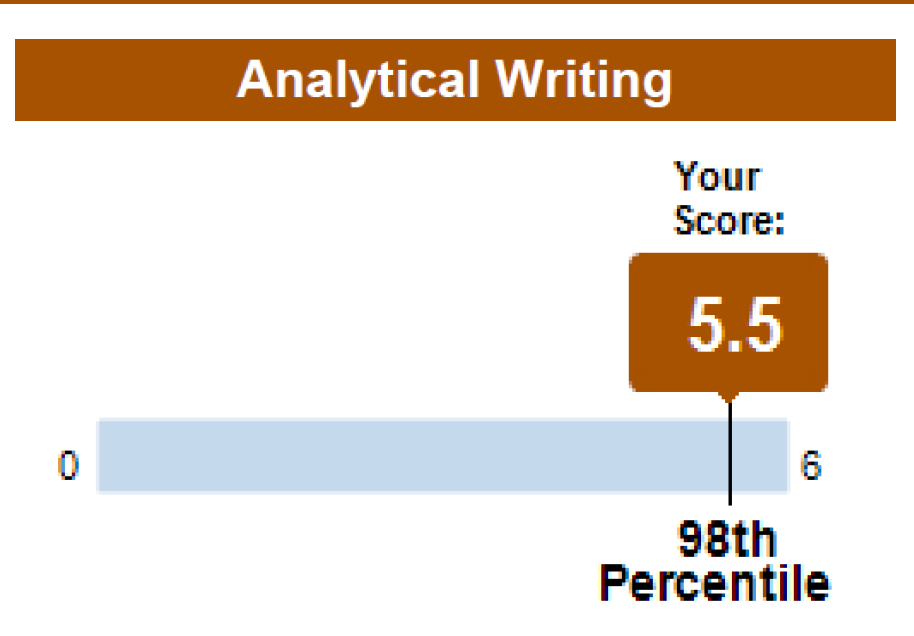
The first time you take the standardized test, you are calibrating. You are in a stranger room doing strange things. You will look around you, you will look at the test, you will look at the proctor and all these things will make you do worse because they will distract you. You should expect doing poorly as much as a first time Olympian.

So if you would like to do well on a test, what is needed isn’t intelligence, but discipline.

Step 1

What you need to do is first know where you’d like to go and what the scores they accept.

Step 2

Once you’ve done that, take the test. After you take the test (and bombed it), that’s when you put that score that you researched on a post it for the school you’d like to attend and paste it on your mirror or somewhere where you will see it every day.

Step 3

Get books from the library on the test. You may need to go to multiple libraries. Try to get the most recent books. At this point you’ll probably be able to sign up on Princeton Review or GRE or GMAT or MCAT website for the test and they often have at least one practice test. If there’s two, take the first one and save the other for right before you take the test again.

Step 4

Study with a schedule. Set a date for when you’d like to take the test, break up the reading of chapters and taking of practice tests and set the time so you have to do something every day, at least on chapter. Plan on spending 2-4 hours a day. I did general studying during the day and slowly worked through the vocabulary at night. Working with flash cards. Often looking up word use through google helped remember words.

You will finish all problems and books and then start taking tests. Take the test with the essays. Take the test so many times you are tired of it. Register for accounts in the books which will often give more practice tests and take written tests and basically take so many tests where you are tired and bored of tests and then take some more. Take the tests timed and with the breaks and no social media or distractions.

If you reach the planned date and you’re not tired of the test, extend the deadline. You want to be so practiced that you can’t stand the test, and then take a few more.

Step 5

At this point you should be hitting a good score all the time. You had gone through all the questions you got wrong and all the tests you could find. It is time to take the test. Make sure you have ear plugs. Take with you warm clothes. Grab food and snacks during breaks and hydration.  You need to be prepared like a mind olympian.


Now all this will be hard but you can do it. One thing that you will have to do is motivate yourself. What I did is motivate myself with idea that each point on the test could be worth thousands of dollars, major career opportunities, life changing events.


Follow these steps and I’m sure you’ll do great. Send me a note from Harvard if this helps :).


To Defer or Not Defer Grad School

break

Slava was my mentor in college: he was older, a grad student and we were from the same country and he always had great advice for me when I needed it. One day I asked Slava if he recommended that I go to grad school. He said no, but if I do, I should do it straight after grad school. As I apply now, in my mid thirties, I see both reasons to take time off and not take time off. There are pros and cons but in general, for most people it is better to go straight through for personal and financial reasons. By going over why, we may find out what is the best course of action in the end.

When a student finishes college, they feel as if they are done with school. They  want to get into the work force, have a nine-to five, go on vacations when they wish and finally, make money. So why would they go to grad school? Well, people who go to grad school on average making $10,000 more than those who do not. Over their lifetime that adds up to a lot of money. So if someone decides to put off grad school, for every year that they are not in grad school they are missing out on that income and more importantly accelerated career that the added education would have given them. Better options in career usually means more options and opportunities, better opportunities and avoiding the stagnation that so many people fall into. Imagine having more money earlier in life and better options for career. People who go to grad school and earn more can afford better vacations, a nicer home, afford better things, and save more for children’s college and retirement. These reasons add up to going to grad school sooner than later.

So the financial reasons for going to grad school are clear, but why shouldn’t I take a year or two off? After all, it’s just a year or two break. Well, studies show that people are less likely to go back to grad school once they leave college. Think about the momentum: you were studying all the time before and now you work at a job that provides food, is nine to five, no homework, no studying for stressful finals. You take vacations, you earn money, you finally have stuff and free weekends. Added is the social pressure of being with friends and co-workers to go out with as well as dating date and hanging out with friends who are not in grad school means the pressure to stay away from grad school is greater than ever. It takes a dedicated and disciplined person to see a better future and walk away from everything. If you go straight through from undergrad to grad, you don’t have to make those difficult decisions. It is true, you have to be poor for a longer period of time and you have to suffer a bit more, but once you’re done, you’re done. Furthermore, if a person waits too long, they may have a relationship, marriage, kids and these things could add costs to grad school as one may now have to do it part time and that would add time and money. Furthermore, with family and responsibilities, one may now be confined to a geographic place, leading a person to take a more convenient school instead of the one that helps the career most.

On the other hand, just because there are good points to going to grad school fresh from college doesn’t mean there aren’t good reasons not to. Some people learn better if they have a little bit of experience in the real world. Maybe they don’t know what to go to grad school for, maybe they don’t know if they want to continue in their current field. Those are great reasons to delay going to grad school. However, for those people there could be an alternative: apply and take your grad school test and then take a year of deferment. This way one is able to get some real world experience, save up a little bit of money, get that grad school letter of recommendation but also have the grad school there in the plan such that they are sure to go. For most people, the field of study will not change and if they do decide on medical school or dental school but studied physics, that is still an option but it would be a minority of most people who choose to switch fields.

I hope it is clear that the decision to go to graduate school, is not as easy as it seems. It is important to consider the social pressure not to go back and the difficulty of studying on a mind no longer accustomed to academic life as well as the financial repercussions for going later or not going at all. For those who need some time off, an alternative does exist by applying while in college such that the plan is in the works to go back, but generally, try to go straight through, it will be easier and more rewarding in the end.

If you like these articles, you can learn more and support more by getting your copy of the Seven Year Degree e-book on Amazon or Lean Pub!


Once You Graduate, Everything is Homework

One reason why it is important to pick the right major and profession is because you cannot stop learning just because you graduated. You will be expected to learn everyday to advance yourself. It means reading journals, text books and magazines on your trade. It means taking classes and it means never stopping to learn, if you want to keep your job.

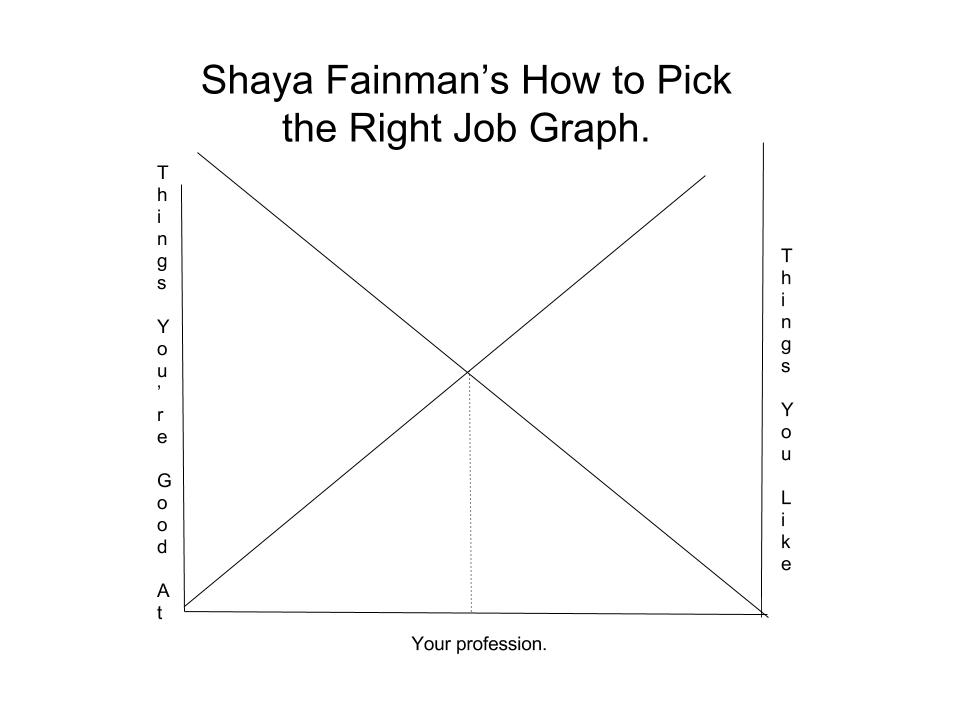
So much learning is impossible if you don’t love what you do. If you don’t honestly care about the work you do and those who you do it for, you will burn out, you will become jaded, you will either quit or be fired. So if you’re reading this book, I know you care for your time and getting it right the first time; so pick the right major and the right job, so you never stop learning.

So this gets to the meat of this post. To succeed in work after you graduate, learn as much as you can consistently and repeatedly.Love and Talent